.png)
Water Testing Windows and Doors: What Homeowners Should Know
Updated: Apr 21
Windows and doors are more than design features. They are part of your home’s exterior envelope, helping protect against water intrusion, air leakage, and long-term damage to the structure itself.
When they fail, the signs are not always dramatic at first. A faint draft. A bit of staining near the trim. A musty odor after rain. In larger or high-value homes, those early clues can be easy to overlook until damage has spread behind walls, flooring, or finishes.
That is where water testing windows and doors becomes especially useful. It helps determine whether these openings are properly resisting water intrusion and can identify issues before they become far more expensive problems.

What Is Weather Testing for Windows and Doors?
Weather testing is used to evaluate how well installed windows and doors resist water penetration and unwanted air infiltration. In practical terms, it is a controlled way to test performance under simulated weather conditions rather than waiting for a storm to expose a weakness.
The process usually begins with a visual inspection to look for obvious gaps, failed sealants, or installation concerns. From there, testing may involve controlled water spray, pressure simulation, and close observation of how the assembly performs.
In more formal testing environments, professionals may use recognized industry standards such as:
ASTM E1105, often used for static water penetration testing
AAMA 502, commonly used for newly installed windows and doors
AAMA 511, often used in forensic testing when an existing leak needs to be diagnosed
For most homeowners, the takeaway is simple: proper testing is methodical, documented, and designed to pinpoint whether a problem is related to the product itself, the installation, or the surrounding wall assembly.
Why Water Testing Matters
Water intrusion around windows and doors can cause far more than surface-level damage. Left unresolved, it can contribute to:
stained drywall and trim
wood rot
mold and mildew
insulation damage
deterioration of surrounding finishes
repeated repair costs from misdiagnosed leaks
This is one reason testing can be so valuable after a renovation, window replacement, or new construction project. Even well-made products can fail if flashing, sealing, drainage, or installation details were not handled correctly.
Premium materials do not automatically guarantee premium performance.
Why It Is Especially Relevant in California
This topic is particularly important in California, where homes may be exposed to a wide range of environmental conditions. Coastal moisture, seasonal rain, wind-driven storms, and sun exposure can all affect how windows and doors perform over time.
In California, testing may also come up in conversations around:
new construction quality control
building envelope performance
energy and code compliance
warranty requirements
diagnosing recurring leaks in luxury or custom homes
Depending on the region, climate exposure, and local building conditions, these issues may need to be addressed. A coastal property, for example, may face very different moisture demands than an inland home.

When Should Windows and Doors Be Tested?
After New Construction
Testing can help confirm that newly installed windows and doors were integrated correctly before the project is fully signed off and before warranty periods narrow.
After Window or Door Replacement
Any time an opening is removed and replaced, the surrounding waterproofing details matter just as much as the new unit itself.
When a Leak Is Suspected
If water appears around a window or door but the source is unclear, testing can help isolate whether the problem is coming from the unit, the installation, or adjacent materials.
During Building Assessments or Preventive Reviews
For older homes, second homes, or properties with a history of envelope issues, targeted testing can be part of a more proactive maintenance strategy.
After Storm-Related Concerns
If a home has been exposed to heavy rain or high winds and new moisture issues appear, testing can help determine whether damage or failure has occurred.
What Happens During the Testing Process?
A professional testing team will usually begin by inspecting the area and documenting visible conditions. They may then use a spray rack or similar testing method to simulate rain while monitoring the assembly for signs of leakage. In some cases, air pressure is also used to replicate more realistic weather conditions.
If water intrusion is detected, the next step is typically further investigation to identify the likely failure point. That could mean a sealant issue, poor flashing, drainage failure, or a broader installation defect.
A formal report may then be prepared outlining:
what was tested
what standards or procedures were used
whether leakage occurred
likely causes
recommended next steps or repairs
That reporting piece can be especially useful when dealing with contractors, builders, or warranty questions.
What Testing Can Reveal
One of the biggest benefits of testing is that it helps remove guesswork.
It may reveal:
failed sealant joints
missing or inadequate flashing
poor sill drainage
water entry at cladding transitions
air leakage around frames or thresholds
installation defects that are not visible from the surface
Water often travels before it becomes visible indoors, which is why the visible stain is not always the true source of the problem.
Who Should Perform the Test?
This is not a casual hose test. Weather testing should be performed by qualified professionals with experience in building envelope diagnostics and water intrusion testing.
That may include:
building envelope consultants
certified testing agencies
forensic leak specialists
approved professionals working under manufacturer's or project's requirements
The goal is not simply to confirm that there is a leak. It is to understand why it is happening and what needs to be corrected.
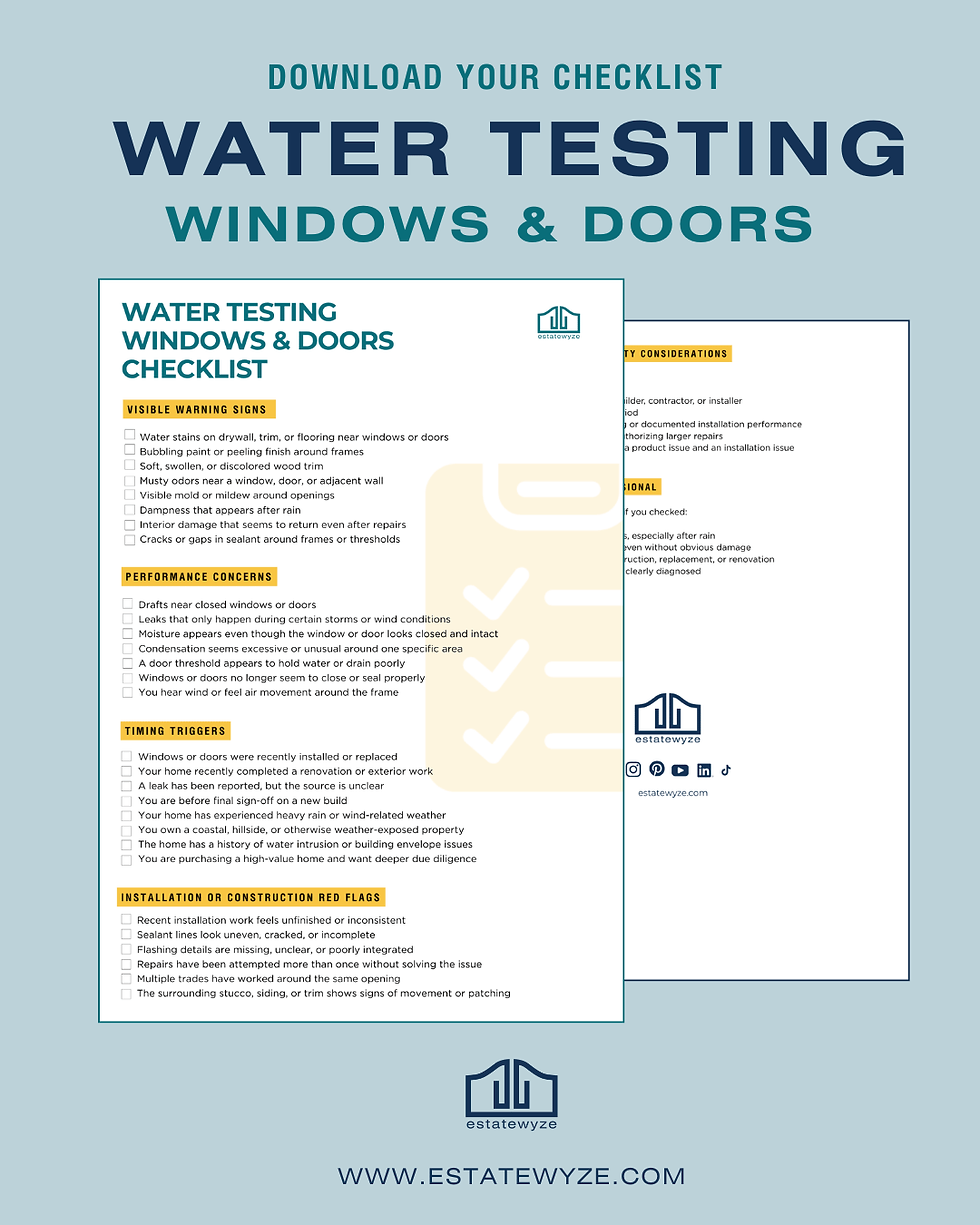
Not sure whether testing is necessary? Review our Window and Door Water Testing Checklist for common warning signs and situations that may call for a closer look. A well-run home depends on performance, not just appearance. Windows and doors may look finished and functional while still hiding vulnerabilities that can lead to much larger issues over time.
Weather testing windows and doors is one of the clearest ways to move from suspicion to evidence. Whether you are addressing a leak, reviewing recent installation work, or protecting a valuable home from preventable damage, testing can provide the clarity needed to make smarter next decisions.


Comments