.png)
Should You Drain a Hot Water Heater?
Updated: Mar 4
Draining a traditional tank-style water heater is one of those maintenance questions that tends to generate mixed advice. Some homeowners flush their tank every year without fail. Others have never touched it and hesitate to start.
The right answer depends largely on two things: the age of the unit and whether it has been maintained consistently.
Before doing anything, start with your owner’s manual or look up your exact model online. Manufacturers outline recommended service intervals, and following those guidelines helps protect performance and warranty coverage. Once you understand what your specific unit calls for, you can make a more informed decision.
Newer Units (Under 5 Years Old)
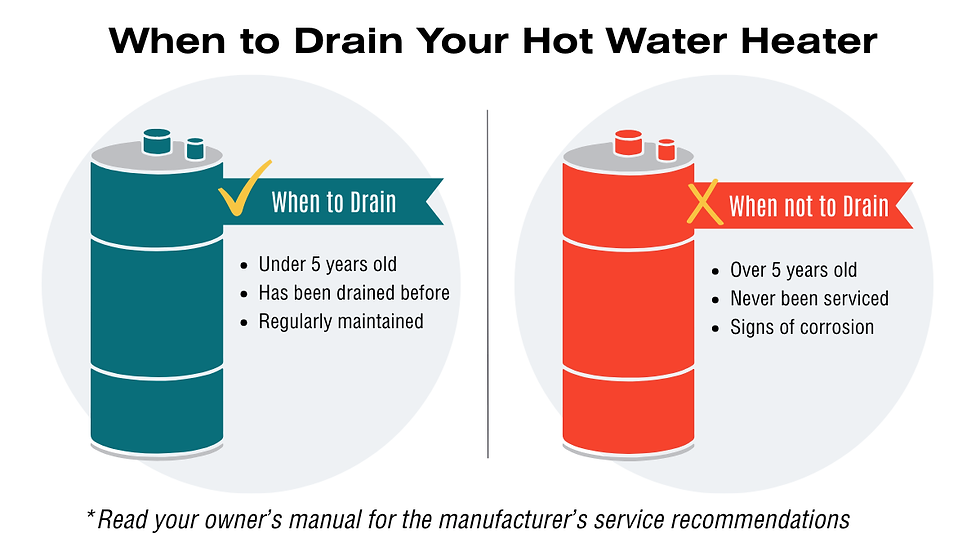
If your water heater is under five years old and has been drained periodically since installation, continuing that rhythm is usually a good idea. Sediment naturally settles at the bottom of the tank, especially in areas with hard water. Routine flushing helps preserve efficiency and can extend the life of the appliance.
When maintenance has been consistent, draining the tank is typically straightforward and low risk. Many homeowners are comfortable handling it themselves as long as they safely shut off power or gas, turn off the water supply, and fully refill the tank before restoring power. If there’s any hesitation, a licensed plumber can handle it quickly and inexpensively.
If the unit is newer but has never been drained, it is still generally safe to begin annual maintenance. Starting early reduces long-term buildup and keeps the system operating as designed.
Older Units (Over 5 Years Old)
Once a water heater passes the five-year mark, the decision becomes more nuanced, especially if it has not been maintained regularly.
If the tank has been drained consistently over its life, there is usually no reason to stop. Continuing scheduled flushing can help the unit reach the upper end of its expected lifespan, which is typically eight to twelve years, sometimes longer under good conditions.
If the tank is older and has never been drained, caution is warranted. Over time, sediment can accumulate and settle in a way that masks minor internal weaknesses. Flushing a tank for the first time after many years can sometimes reveal small leaks or cause an aging drain valve not to reseal properly. In these cases, it is often wise to have a plumber assess the unit before attempting a flush. They can advise whether maintenance makes sense or whether it is better to begin planning for replacement.
The Bigger Picture
Draining a water heater isn’t about checking a box or doing maintenance just because you think you’re supposed to. It’s about understanding the age and condition of your system and making a practical decision. Maintenance works best when it starts early and continues consistently, following the manufacturer’s recommendations. Problems tend to happen when a unit has been ignored for years and then suddenly flushed late in its lifespan.
If you know how old your water heater is and whether it has been serviced before, the path forward becomes clearer. A newer unit benefits from a steady routine. An older unit with no service history calls for a more cautious approach.
With home maintenance, timing and context matter more than obligation.


Comments